يَـٰٓأَيُّهَا ٱلنَّاسُ كُلُوا۟ مِمَّا فِى ٱلْأَرْضِ حَلَـٰلًا طَيِّبًا وَلَا تَتَّبِعُوا۟ خُطُوَٰتِ ٱلشَّيْطَـٰنِ ۚ إِنَّهُۥ لَكُمْ عَدُوٌّ مُّبِينٌ
“O mankind, eat from whatever is on earth [that is] lawful and good and do not follow the footsteps of Satan. Indeed, he is to you a clear enemy.”
The 'Eating tayyib' guide
Eating tayyib
The Qur’an often pairs what is lawful (halal) with what is good (tayyib), for example in 2:168 and 16:114. Food can be lawful without being good for the body: tayyib invites us to consider the quality, moderation and origin of what we eat as well.
“Abu Huraira reported Allah's Messenger (ﷺ) as saying: O people, Allah is Good and He therefore, accepts only that which is good. And Allah commanded the believers as He commanded the Messengers by saying: "O Messengers, eat of the good things, and do good deeds; verily I am aware of what you do" (xxiii. 51). And He said: "O those who believe, eat of the good things that We gave you" (ii. 172). He then made a mention of a person who travels widely, his hair disheveled and covered with dust. He lifts his hand towards the sky (and thus makes the supplication): "O Lord, O Lord," whereas his diet is unlawful, his drink is unlawful, and his clothes are unlawful and his nourishment is unlawful. How can then his supplication be accepted?”
يَـٰٓأَيُّهَا ٱلرُّسُلُ كُلُوا۟ مِنَ ٱلطَّيِّبَـٰتِ وَٱعْمَلُوا۟ صَـٰلِحًا ۖ إِنِّى بِمَا تَعْمَلُونَ عَلِيمٌ
“[Allāh said], "O messengers, eat from the good foods and work righteousness. Indeed I, of what you do, am Knowing.”
Moderation
Excess is blameworthy. The hadith first reminds us that a few mouthfuls are enough to keep us upright. If more is needed, it recommends one third for food, one third for drink and one third for breathing. This is a reminder of moderation, not an obligation to fill your stomach at every meal.
۞ يَـٰبَنِىٓ ءَادَمَ خُذُوا۟ زِينَتَكُمْ عِندَ كُلِّ مَسْجِدٍ وَكُلُوا۟ وَٱشْرَبُوا۟ وَلَا تُسْرِفُوٓا۟ ۚ إِنَّهُۥ لَا يُحِبُّ ٱلْمُسْرِفِينَ
“O children of Adam, take your adornment [i.e., wear your clothing] at every masjid, and eat and drink, but be not excessive. Indeed, He likes not those who commit excess.”
“Miqdam bin Ma'dikarib said: "I heard the Messenger of Allah (S.a.w) saying: 'The human does not fill any container that is worse than his stomach. It is sufficient for the son of Adam to eat what will support his back. If this is not possible, then a third for food, a third for drink, and third for his breath."”
The Tayib score
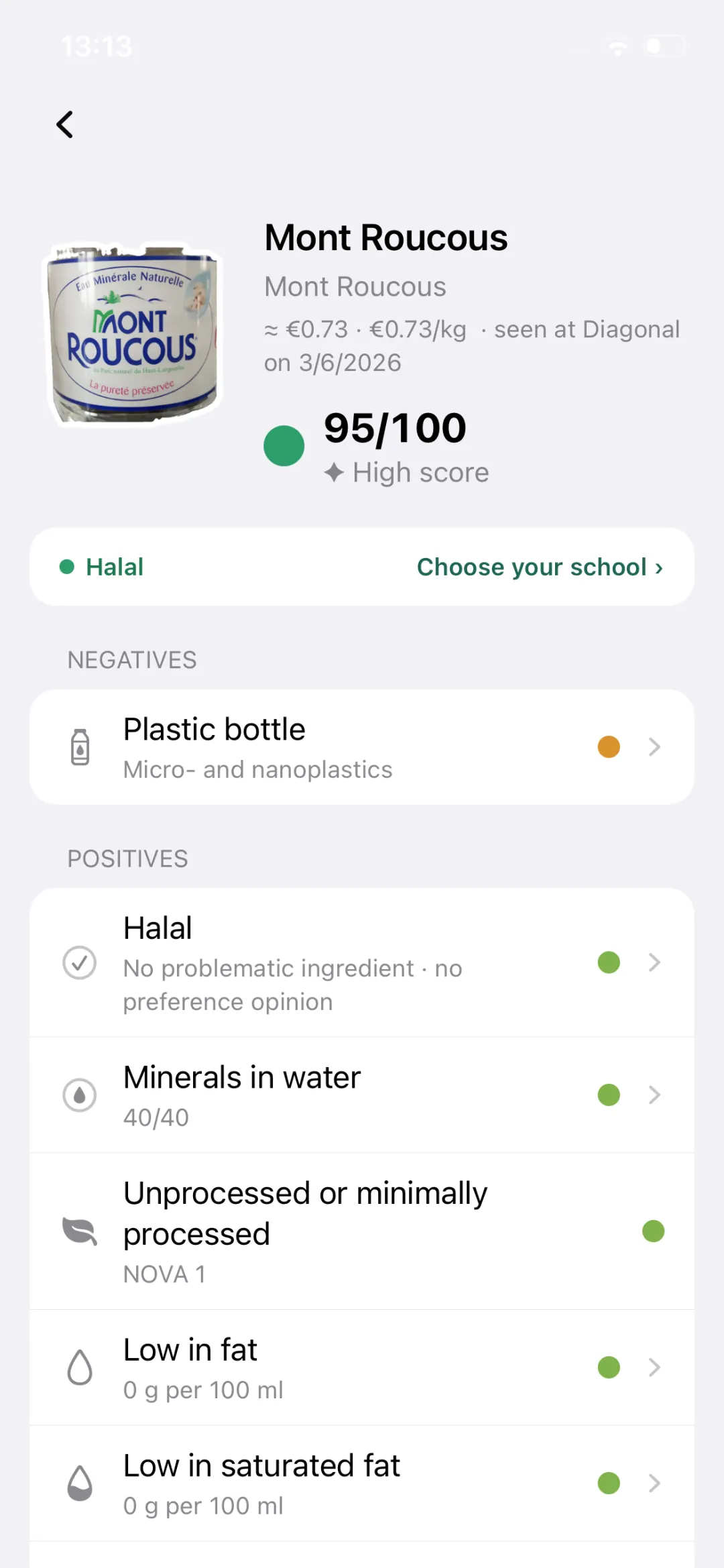
The score uses four criteria chosen by Tayib: nutritional profile (40 points), processing and additives (30), alcohol and stimulants (15), sugars, salt and fats (15). These weights come from neither the Qur’an nor the Sunnah and do not measure religious purity or spiritual benefit. A food mentioned in the texts may be highlighted separately, without affecting the score.
Tayib gives 0 to a product classified as haram and caps doubtful or unverified cases at 49. From 75 upwards, the score is described as high. These are app conventions, not religious thresholds; missing data and the scoring criteria are shown.
Two answers, never mixed
In Tayib, the halal verdict and the score are separate. The verdict says whether a forbidden, doubtful or permitted ingredient is on the list, for your school. The score rates the composition out of 100, with its negatives and positives — additives, nitrites, salt, processing (NOVA), packaging — and the studies behind them. A product can be halal and score poorly; a doubtful product never goes above 49.